Greek Village Salad (Horiatiki Salata Recipe)
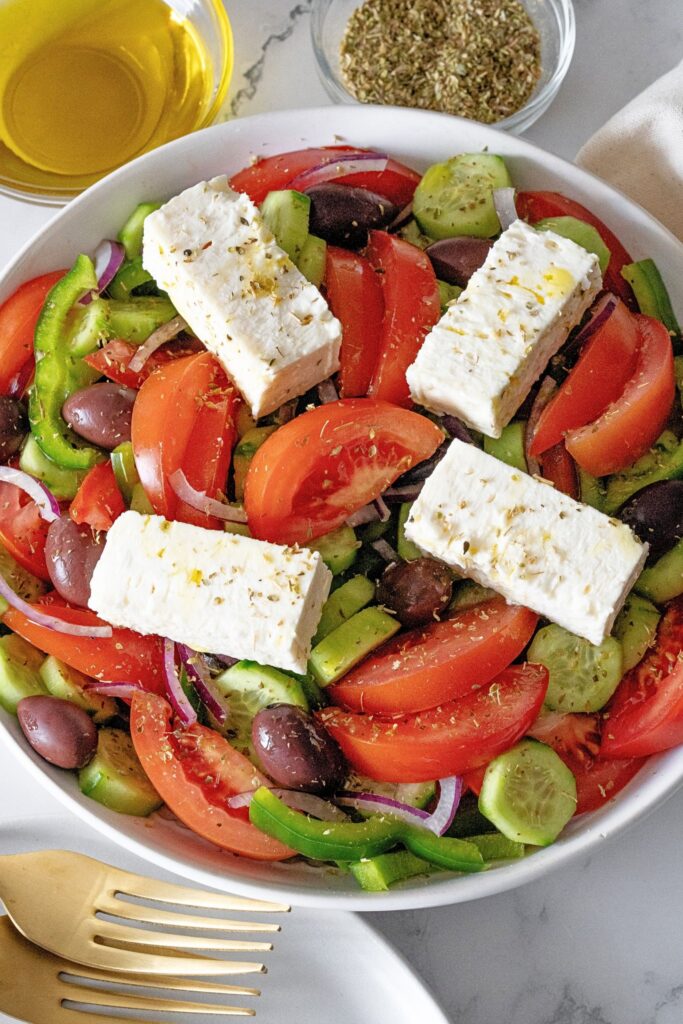
This Greek Village Salad is an authentic recipe made with a handful of fresh and simple ingredients. All you need is ripe tomatoes, crisp cucumber, red onion, green bell pepper, Kalamata olives, feta cheese, extra virgin olive oil, a splash of red wine vinegar, and dried oregano. It’s a refreshing side dish to pair with any Mediterranean-inspired meal.
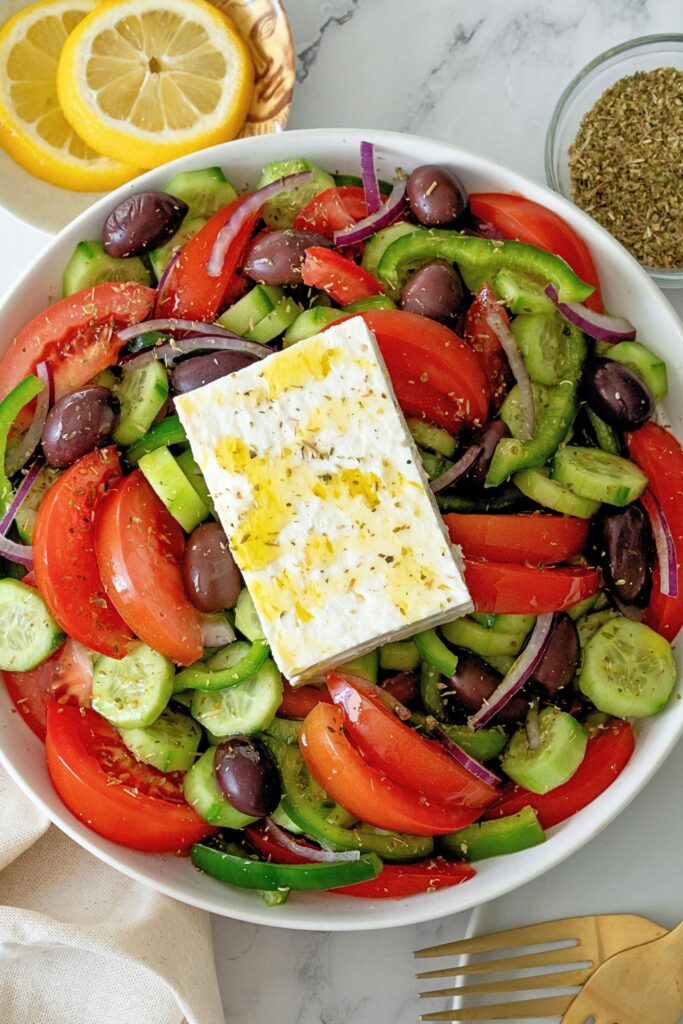
My husband and I love going to a local Greek restaurant that serves a delicious Greek Salad. It’s a rustic salad made without lettuce and uses chunky vegetables and a simple dressing.
The most popular time to make this salad is in the spring, summer, and early fall months when tomatoes are in season. I like to make this salad with cherry tomatoes during the winter months, which are sweet and juicy year-round.
Why You’ll Love This Greek Village Salad Recipe
No lettuce required. Unlike American-style Greek salad, this authentic Greek village salad is traditionally made without lettuce. Instead, fresh cut vegetables are the star of this wholesome salad.
Fresh, simple ingredients. This delicious Greek salad is made with fresh, juicy tomatoes, red onion, crisp cucumbers, tangy kalamata olives, green bell pepper, and creamy feta cheese.
Drizzle the salad with extra virgin olive oil, a splash of red wine vinegar, and a generous sprinkle of dried oregano.
Quick and easy to prepare. There’s no cooking required. Simply chop the vegetables, add the feta and olives, then drizzle everything with extra virgin olive oil and a little red wine vinegar if desired.
Perfect side dish for any meal. Serve this Greek salad alongside Greek lemon chicken thighs, grilled chicken, baked salmon, souvlaki, or crusty bread for soaking up all the juices at the bottom of the bowl.
What Is a Traditional Greek Salad?
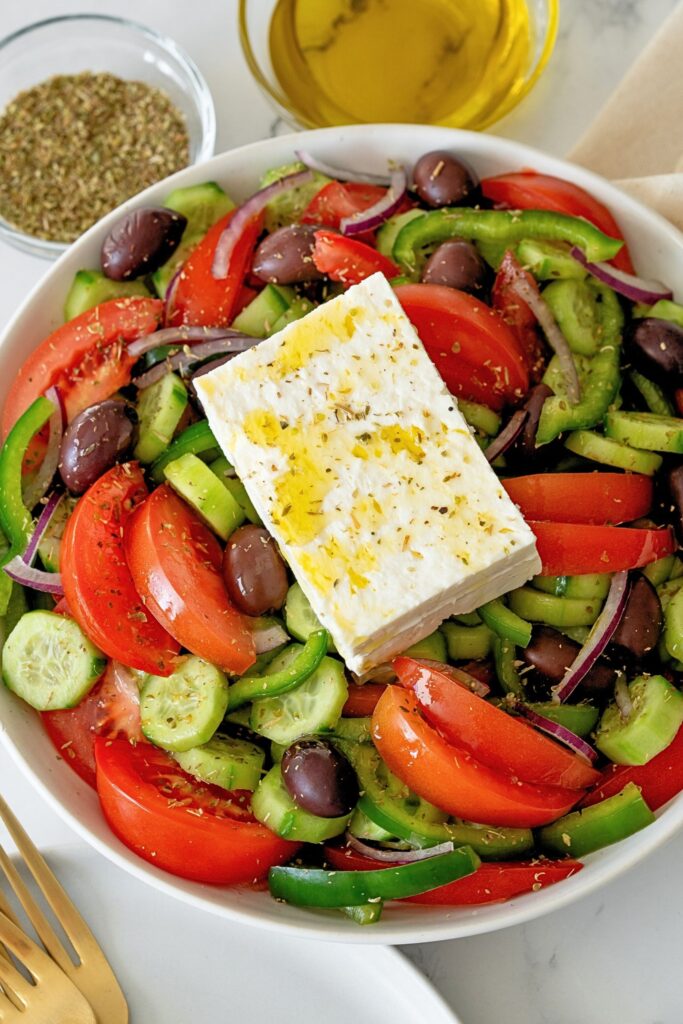
A traditional Greek salad is known as Horiatiki, which translates to “village salad” or peasant salad” in Greek.
It’s a rustic, no-fuss salad that a farmer or villager would easily make from their garden. It features ripe tomatoes, cucumbers, red onion, bell pepper, kalamata olives, and feta cheese.
This salad is made without lettuce and uses chunky, fresh veggies tossed with extra virgin olive oil, a splash of red wine vinegar, and dried oregano.
The key to a really good Greek village salad is to use flavorful tomatoes, high-quality olive oil, and real Greek feta cheese made from sheep’s milk or a blend of sheep’s and goat’s milk.
Greek Village Salad Ingredients
Tomatoes: My favorite tomatoes to use for this Greek Village Salad are one-the-vine tomatoes. You want to choose ones that are ripe and juicy, but firm and will hold their shape after being sliced.
You can also use field tomatoes, such as beefsteak or heirloom tomatoes.
If you’re making this salad in the winter when fresh tomatoes are not in season, I recommend using cherry tomatoes. They are sweet and consistent year-round.
Bell pepper: I like using crisp, green bell pepper in this salad. I cut it into thin strips. You can cut it into thin horizontal rings or bite-sized chunks if you prefer.
Cucumber: I like using Persian cucumbers in this salad because they are small and nearly seedless. You can use regular English cucumber if you prefer.
You don’t have to peel the skin, but I like to.
Red onion: You just need one small onion for this salad. You can slice it into thin half-moons or rings.
If you want to tame the sharp taste of the raw onion, soak it in cold water for 10 to 15 minutes, then drain the water thoroughly. Use a paper towel to pat the slices dry before adding them to the salad.
Kalamata olives: You can use whole or pitted Kalamata olives for this salad. Whole olives will stay juicer, but pitted olives are easier to eat.
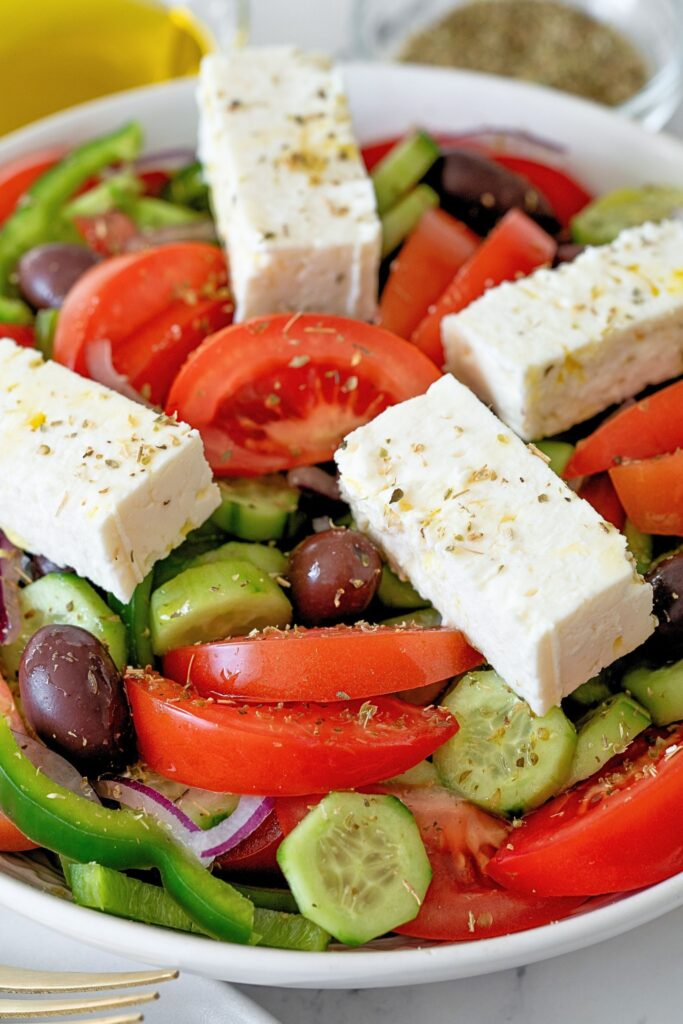
Feta: I use a whole block of traditional Greek sheep’s milk feta that’s packed in brine for this salad. Traditionally, the block is placed right on top of the cut vegetables.
It’s meant to be broken up at the table when serving, or you can cut it into large chunks or squares. You can crumble it if you prefer.
Dried oregano: This is a classic ingredient in Greek salad. Crush the dried oregano between your hands or fingers right before sprinkling it over the salad. 1 tablespoon might seem like a lot, but it adds good flavor to the salad.
You can start by using ½ tablespoon if you are worried 1 tablespoon will be too much, then add more if needed.
Extra virgin olive oil: The dressing for this salad is super simple. It’s just a drizzle of high-quality olive oil, dried oregano, a splash of red wine vinegar (if desired), salt, and freshly ground black pepper to taste.
I recommend using extra virgin olive oil from Greece if you have it available.
Red wine vinegar: Traditionally, Greek Village Salad doesn’t use vinegar or lemon juice. Instead, it relies on extra virgin olive oil and the juices from the ripe vegetables to flavor the salad.
But you can add a little red wine vinegar if you want to add tangy bite.
Salt and freshly ground black pepper: There is salt already in the feta, so season to taste with salt and black pepper before serving.
If you want, you can season the sliced tomatoes with salt before adding them to the salad. Place the chopped tomatoes in a colander set over a bowl. Sprinkle them with a little sea salt or kosher salt and let them sit for 10 to 30 minutes.
Then combine the tomatoes with the rest of the salad ingredients. You can save the tomato juice to use as part of the dressing if desired.
Optional additions: Other ingredients you can add to this salad include capers (about 1 to 2 tablespoons, depending on how salty you like your food) or fresh herbs like parsley or dill (which goes great with the red onion).
How to Make Greek Village Salad
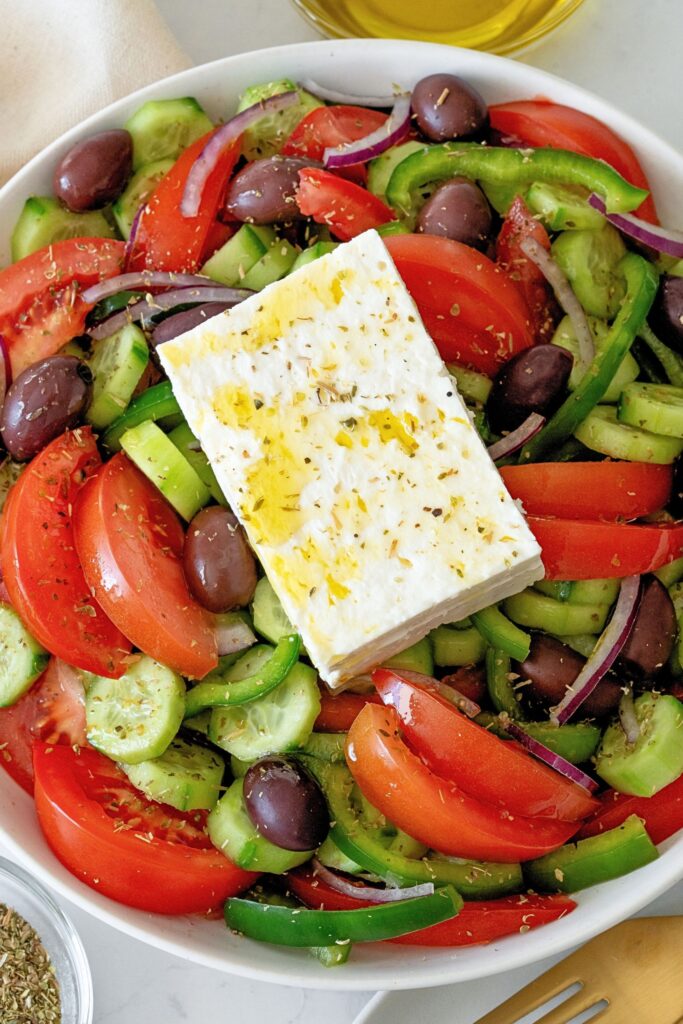
Add the tomatoes, bell pepper, red onion, cucumber, and olives to a large serving bowl.
Sprinkle most of the oregano over the vegetables, drizzle most of the extra virgin olive oil over the vegetables, add the red wine vinegar (if using), and season with salt and freshly ground black pepper.
Top the vegetables with the block of feta and sprinkle the remaining oregano and drizzle the remaining extra virgin olive oil over the feta cheese. Garnish with capers (if using) or fresh chopped herbs (parsley or dill if using).
Tips for Making the Best Greek Village Salad
Should You Peel Cucumbers for Greek Salad? This is a personal choice. I like to use Persian cucumbers because the skin is thin, but if I prefer to peel the skin off if I’m using English cucumber. You do what you like best.
Should You Crumble or Slice the Feta Cheese? Traditionally, Greek salad is served with a block of feta cheese on top of the vegetables, which you can break apart at the table when serving.
You can choose to crumble the feta or cut it into bite-size cubes if you prefer.
How to Keep Your Greek Salad from Getting Watery. It’s normal for the juices from the vegetables to pool at the bottom of the bowl.
The combination of the tomato juice, olive oil, and red wine vinegar creates a delicious dressing that’s perfect for dipping crusty bread or warm pita bread into.
To prevent your Greek salad from getting too watery, use ripe, but firm tomatoes. Overripe tomatoes tend to release more liquid or become mushy after slicing.
Choose tomatoes that are ripe and flavorful but still hold their shape after chopping.
What Kind of Vinegar Goes in Greek Salad? A traditional Greek Salad doesn’t contain vinegar or lemon juice. But many regional and modern home recipes add a splash of red wine vinegar to the salad. This adds a bright and tangy flavor.
What to Serve with Greek Village Salad
This salad is a refreshing side dish that pairs well with grilled meats, seafood, hearty Mediterranean-inspired mains, or warm pita bread. Below are some suggestions:
Meats and Seafood: Greek lemon chicken thighs, Greek sheet pan chicken, chicken souvlaki, gyros, baked salmon, or grilled shrimp.
Classic comfort food: Moussaka or pastitsio.
Bread: Crusty bread or warm pita bread.
Homemade tzatziki sauce or hummus.
Greek lemon rice or roasted potatoes.
Can You Make Greek Village Salad Ahead of Time?
Yes, you can make this salad ahead of time. But for the best taste and texture, I recommend assembling the salad just before serving.
Chop the vegetables a few hours in advance and store them in separate airtight containers in the fridge to keep them fresh.
Wait until just before serving to add the salt, feta, olives, olive oil, red wine vinegar, and oregano.
How to Store Leftover Greek Village Salad
Greek salad is best enjoyed fresh, but you can save leftovers for later. Transfer the leftover salad to an airtight container and store in the fridge for 1 to 2 days.
The tomatoes and cucumber will release some water as it sits, so the salad may become softer and juicer. You can drain some of the liquid or add an extra drizzle of olive oil just before serving.
Please let me know how you like this Greek Village Salad recipe in the comments below! Your feedback and review encourages me to keep creating new and yummy recipes. I hope you love this salad as much as I do.
Print
Greek Village Salad (Horiatiki Salata Recipe)
- Total Time: 20 minutes
- Yield: 4 servings 1x
- Diet: Vegetarian
Description
This Greek Village Salad is an authentic recipe made with a handful of fresh and simple ingredients. All you need is ripe tomatoes, crisp cucumber, red onion, green bell pepper, Kalamata olives, feta cheese, extra virgin olive oil, a splash of red wine vinegar, and dried oregano. It’s a refreshing side dish to pair with any Mediterranean-inspired meal.
Ingredients
- 4–5 ripe (but firm) on-the-vine tomatoes, cut into bite-sized wedges
- 1 medium green bell pepper, halved and sliced into strips
- 1 small red onion, halved and thinly sliced
- 4–5 Persian cucumbers, sliced or cut into half moons
- 1/3 cup kalamata olives, pitted if desired
- 6–8 ounce block of feta
- 1 tablespoon dried oregano
- 3–4 tablespoons extra virgin olive oil, to taste
- 1 tablespoon red wine vinegar, or to taste (optional)
- Salt and black pepper, to taste
- 1–2 tablespoons fresh chopped parsley, dill, or mint, for garnish (optional)
- 1–2 tablespoons capers, for garnish (optional)
Instructions
- Add the tomatoes, bell pepper, red onion, cucumber, and olives to a large serving bowl.
- Sprinkle most of the oregano over the vegetables, drizzle most of the extra virgin olive oil over the vegetables, add the red wine vinegar (if using), and season with salt and freshly ground black pepper.
- Top the vegetables with the block of feta and sprinkle the remaining oregano and drizzle the remaining extra virgin olive oil over the feta cheese. Garnish with capers (if using) or fresh chopped herbs (parsley, dill, or mint if using).
Notes
Tomatoes: Choose that are ripe and juicy, but firm and will hold their shape after being sliced. I like on-the-vine tomatoes, but you can use field tomatoes, beefsteak tomatoes, heirloom tomatoes, Roma tomatoes, or cherry tomatoes. Cut large tomatoes into bite-sized wedges. Some people think it tastes better when cutting the tomatoes on a slight angle.
Bell pepper: I like using green bell pepper, cut into rings, bite-sized chunks, or strips. You can use red, yellow, or orange bell pepper if you want.
Cucumber: I like using Persian cucumbers for this salad, but you can use English cucumber if you prefer. Peel the skin if you wish, or not. I like to slice Persian cucumbers because they’re small. Cut the English cucumber into half moons if using.
Red onion: Thinly slice the red onion into rings or half moons. You can tame the sharp taste of the red onion by soaking it in cold water for 10-15 minutes before assembling the salad. If soaking, make sure to pat the onion slices dry with a paper towel before adding them to the salad.
Kalamata olives: You can use whole or pitted Kalamata olives for this salad. Whole olives will stay juicer, but pitted olives are easier to eat.
Feta: I use a whole block of traditional Greek sheep’s milk feta that’s packed in brine for this salad. Traditionally, the block is placed right on top of the cut vegetables. It’s meant to be broken up at the table when serving, or you can cut it into large chunks or squares. You can crumble it if you prefer.
Extra virgin olive oil: Choose the highest quality Greek olive oil you can afford for this salad.
Red wine vinegar: This is an optional ingredient. I like to add it because I love the tangy, bright taste it adds to this salad. You can use freshly squeezed lemon juice if you prefer.
- Prep Time: 20 minutes
- Cook Time: 0 minutes
- Category: Salad
- Method: Chopped
- Cuisine: Greek