Vegetarian Lasagna
This is the best vegetarian lasagna recipe ever! It’s filled with layers of tender lasagna noodles, chunky Italian marinara sauce, creamy ricotta cheese with a hint of lemon zest, fresh basil, and plenty of mozzarella cheese and Parmigiano Reggiano. It comes out the oven hot and bubbly with a golden-brown crust that makes for the ultimate comfort food.
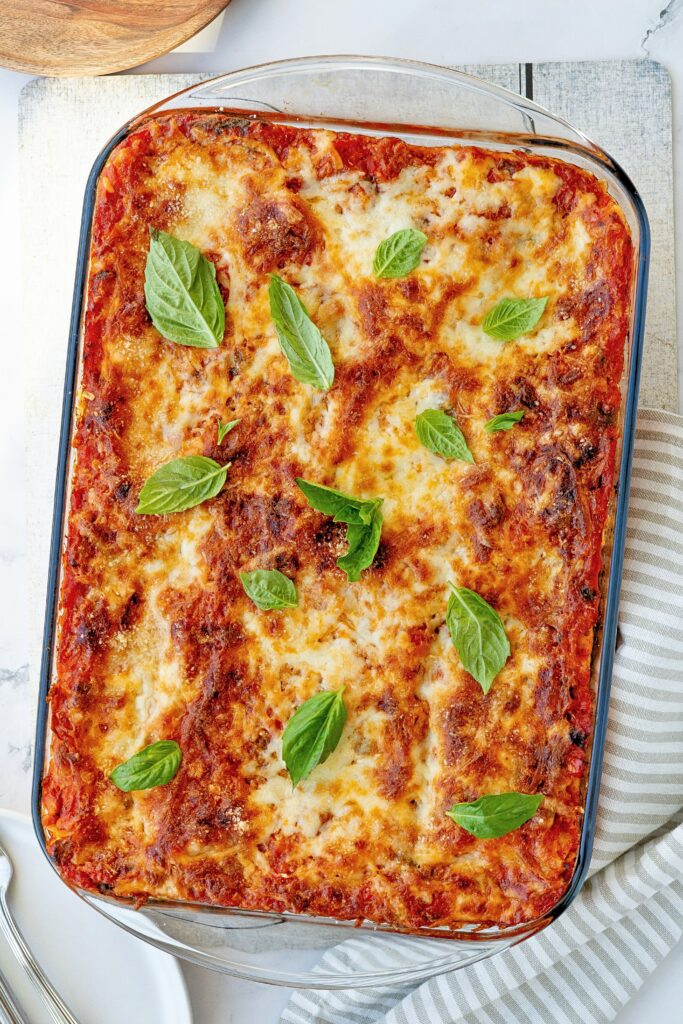
Lasagna is one of my favorite family meals to make during the holidays. It’s a labor of love, but it always gets rave reviews and even my picky toddler gobbles this up. It’s perfect when you need a vegetarian main dish that is filling and satisfying.
I like to serve it alongside a fresh salad, such as my Arugula Lemon Salad, Arugula Pear Salad, or this Italian Chopped Salad.
When I set out on the quest to make the best vegetarian lasagna, I knew it had to be something that was simple and easy to make. I didn’t want to bother roasting vegetables, so instead I added veggies to a traditional Italian marinara sauce.
It’s loaded with onions, celery, carrot, red and green bell pepper to make a chunky and delicious tomato sauce. You could use your favorite store-bought marinara sauce, but I truly believe homemade marinara sauce from scratch makes a huge difference!
Vegetarian lasagna ingredients

Olive oil: This adds richness to the marinara sauce.
Onion, carrot, celery: The combination of onion, carrot, and celery adds a delicious flavor base to this homemade tomato sauce.
I like to grate the celery and carrot, so it blends nicely into the sauce. You can finely dice the vegetables you prefer a chunkier texture.
Red and green bell pepper: This adds a touch of sweetness and depth to the marinara sauce.
Canned whole peeled tomatoes: I recommend using Italian tomatoes, such as San Marzano canned tomatoes if you can find them. They contain less water content than regular tomatoes and are perfect for creating a velvety marinara sauce.
Seasoning: I like to use dried oregano, bay leaf, kosher salt, red pepper flakes, and fresh minced garlic in this tomato sauce.
Tomato paste: This deepens the tomato flavor and thickens the consistency of the sauce.
Balsamic vinegar: This adds a touch of sweetness and helps balance the flavors of the tomato sauce.
Fresh basil: This adds good flavor to the marinara sauce. If you don’t have fresh basil, you can substitute with Italian parsley or 1 teaspoon of dried basil. Add the dried basil when you add the dried oregano.
Lasagna noodles: I like using regular dried lasagna noodles that you need to boil. They are thicker and provide a firm texture.
Ricotta cheese: I use full-fat ricotta cheese in this recipe.
Mozzarella cheese: I use low-moisture mozzarella cheese for this lasagna recipe because it has less water content. This prevents a watery or soupy lasagna.
Parmigiano-Reggiano: This adds a rich and savory depth of flavor to the lasagna.
Traditionally, parmesan cheese uses animal rennet, which makes it non-vegetarian. If you need a vegetarian parmesan cheese, there are many vegetarian-friendly versions available.
Look for the words “vegetarian rennet”, “microbial rennet”, or vegetable rennet” on the label. If you can’t find a vegetarian version, then leave out the parmesan cheese.
Lemon zest: Fresh lemon zest can help cut through the richness of lasagna by adding a bright and slightly citrusy taste.
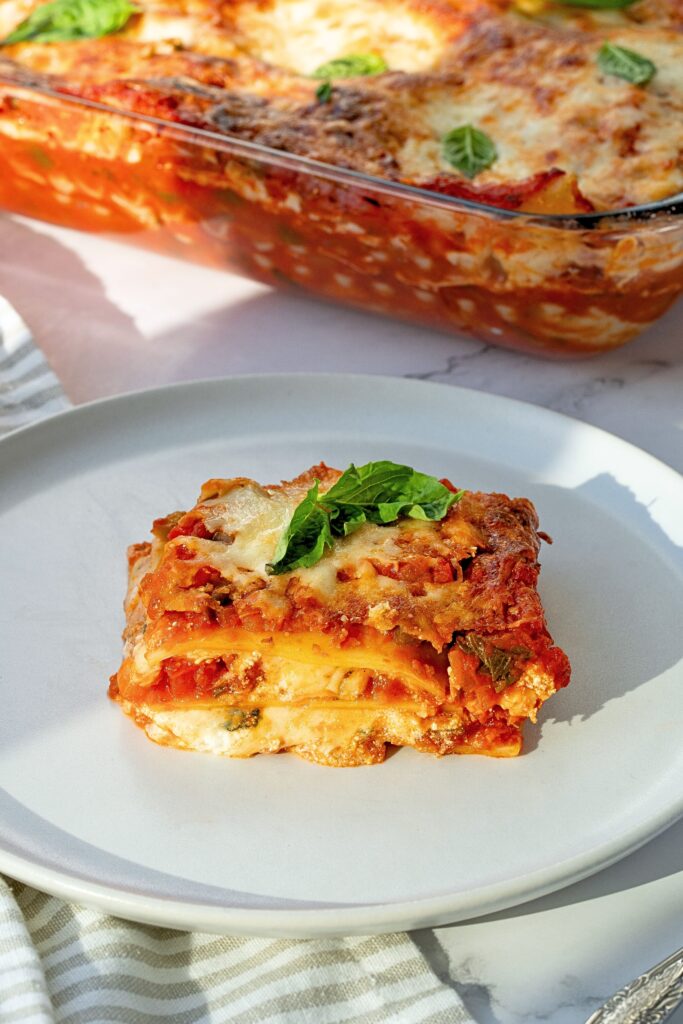
How to make vegetarian lasagna
Make the marinara sauce. In a large heavy-bottomed pot, heat the olive oil over medium heat. Once the oil is hot, add the onion, carrot, celery, red bell pepper, green bell pepper, and salt. Cook, stirring occasionally until the vegetables are tender, about 10 minutes.
Add the red pepper flakes and garlic and let cook for 1 minute until fragrant. Add the tomato paste and cook for 1 minute, stirring everything together.
Add the canned tomatoes with their juices, bay leaf, dried oregano, and balsamic vinegar. Let the sauce simmer on low heat, uncovered, for 30 minutes, stirring occasionally. It will reduce slightly in volume and thicken.
Stir in the fresh basil and let simmer for another 5 minutes. Taste and adjust the seasoning with more salt or red pepper flakes if needed. Remove the heat and discard the bay leaf. Set aside to cool.
Cook the lasagna noodles. Bring a large pot of salted water to a rolling boil over high heat. Add the noodles and stir a few times to prevent them from sticking together.
Cook the lasagna noodles until 1 or 2 minutes BEFORE the al dente cooking time. Drain the noodles into a colander and drizzle a little olive oil over the noodles. Gently toss to combine to prevent them from sticking together and set aside.
Make the ricotta mixture. Add the ricotta cheese, ½ cup of the Parmigiano-Reggiano, fresh lemon zest, and fresh basil in a large bowl. Stir everything together until combined.
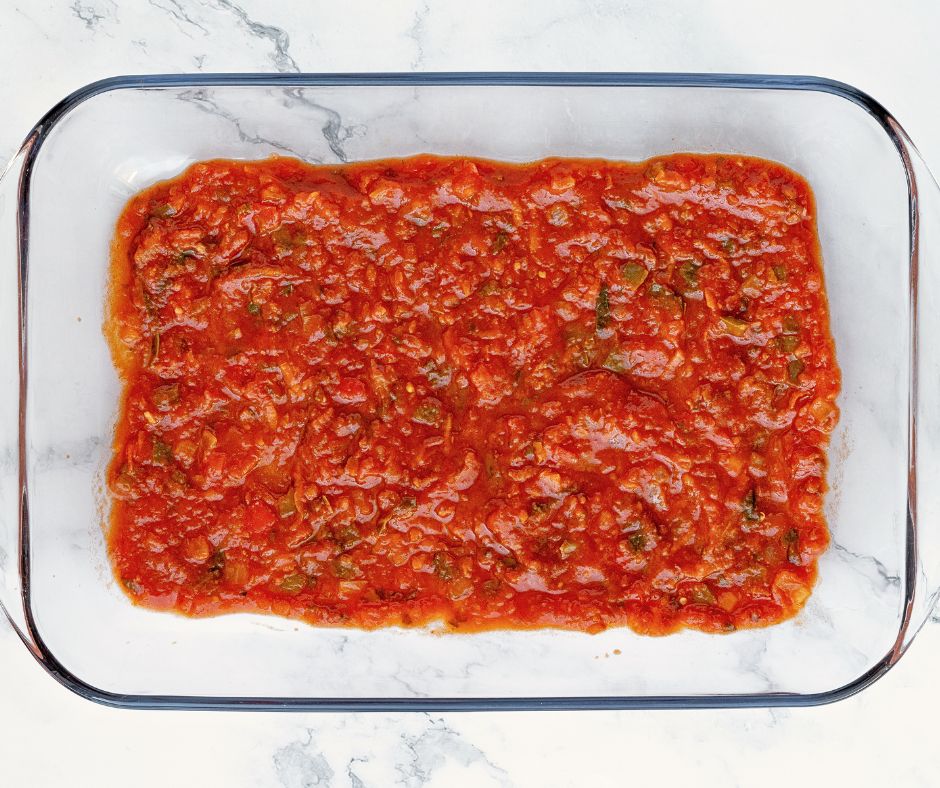
Assemble the lasagna. Preheat the oven to 375°F. Spread one-quarter of the marinara sauce over the bottom of a 9×13-inch baking dish.
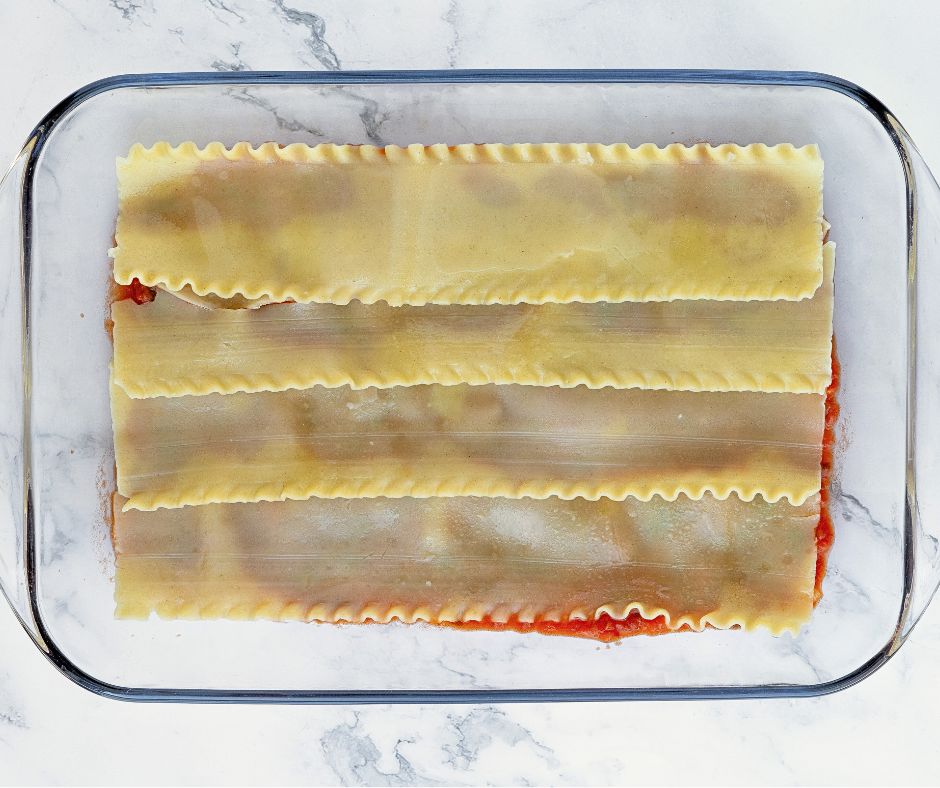
Place the cooked lasagna noodles in an even layer on top of the sauce, tearing them to fit if necessary. Use 3 to 4 lasagna noodles per layer.
Spread another quarter of the marinara sauce over the first layer of noodles. Add half of the ricotta mixture over the sauce and spread it out to make an even layer. It’s okay if there are some gaps. Sprinkle one-third of the mozzarella over the ricotta cheese layer.
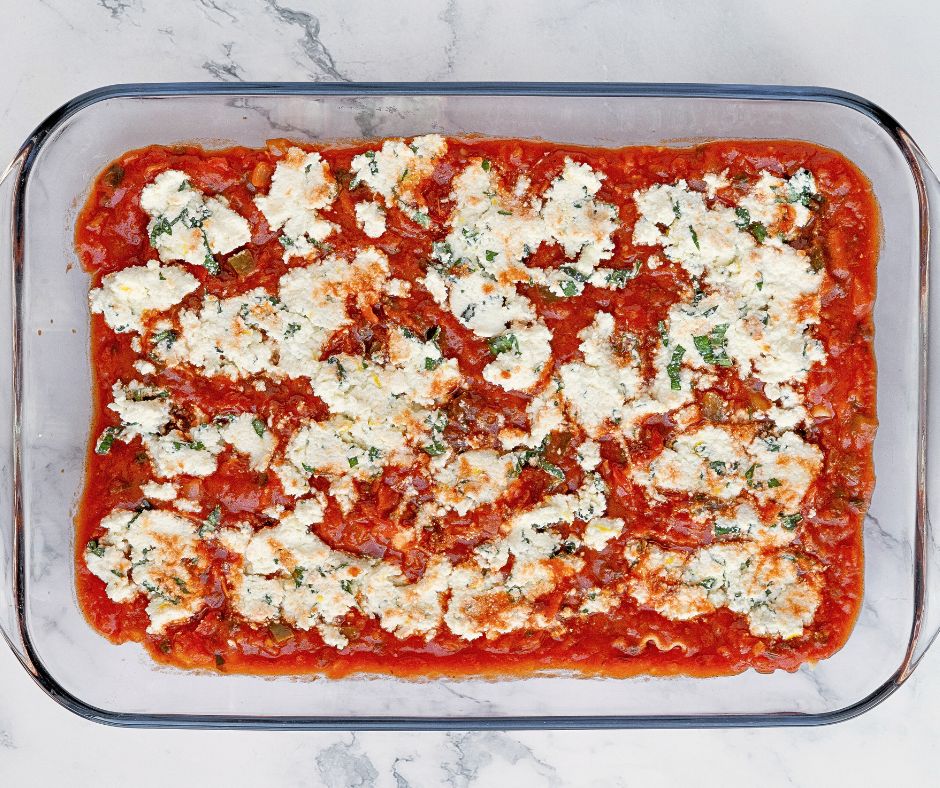
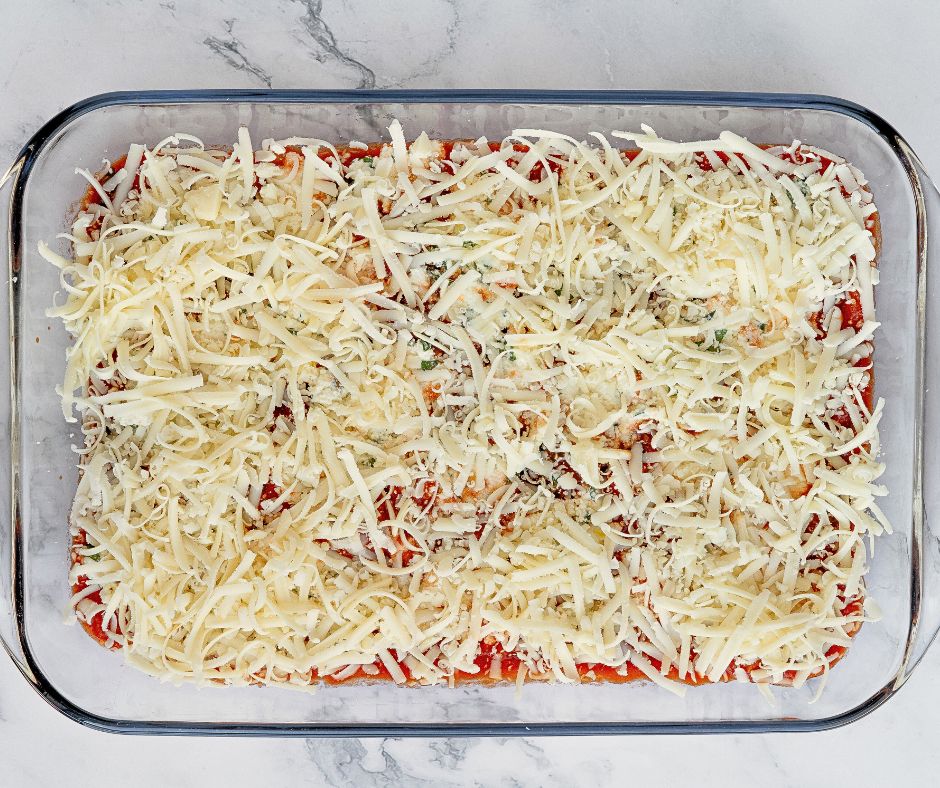
Add a second layer of noodles over the mozzarella layer. Spread another quarter of the marinara sauce over the noodles. Add the remaining ricotta mixture over the sauce and spread it out to make an even layer. Sprinkle another third of the mozzarella over the ricotta layer.
Add the final layer of noodles over the mozzarella layer. Spread the remaining marinara sauce over the noodles. Sprinkle the rest of the mozzarella cheese over the sauce, then sprinkle the remaining ½ cup of Parmigiano-Reggiano over the entire lasagna.
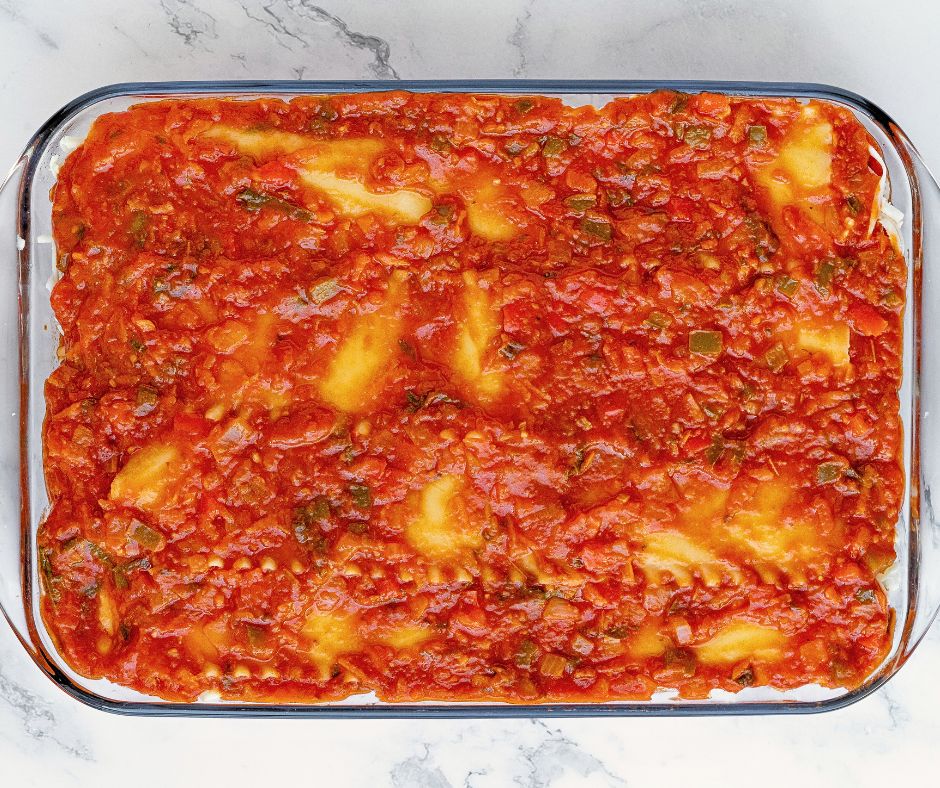
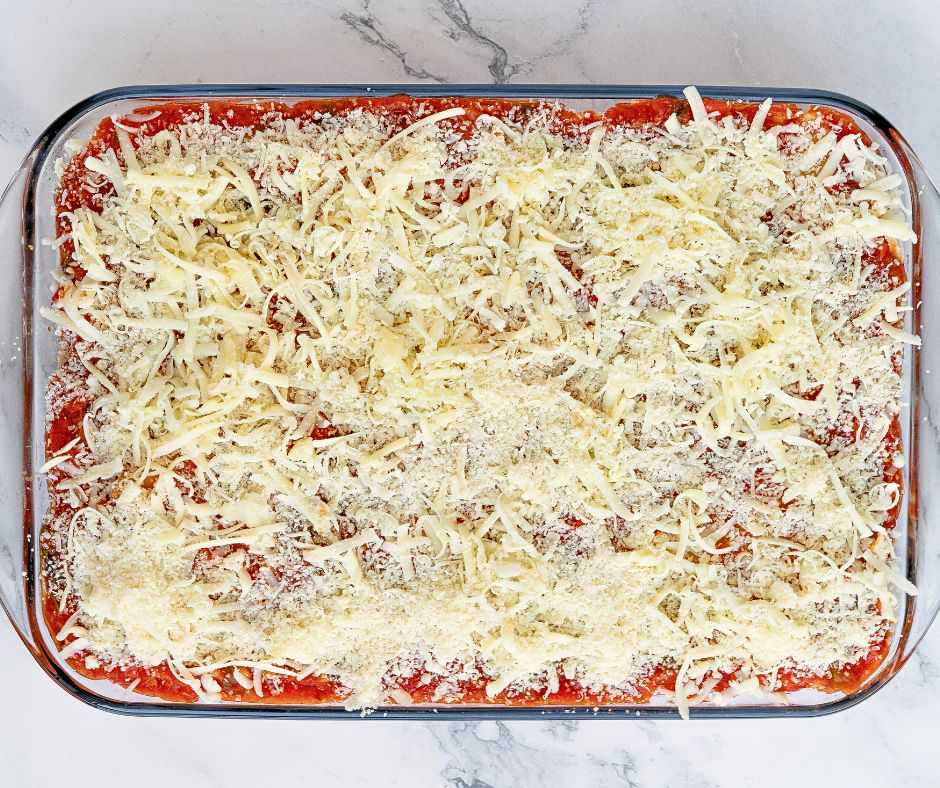
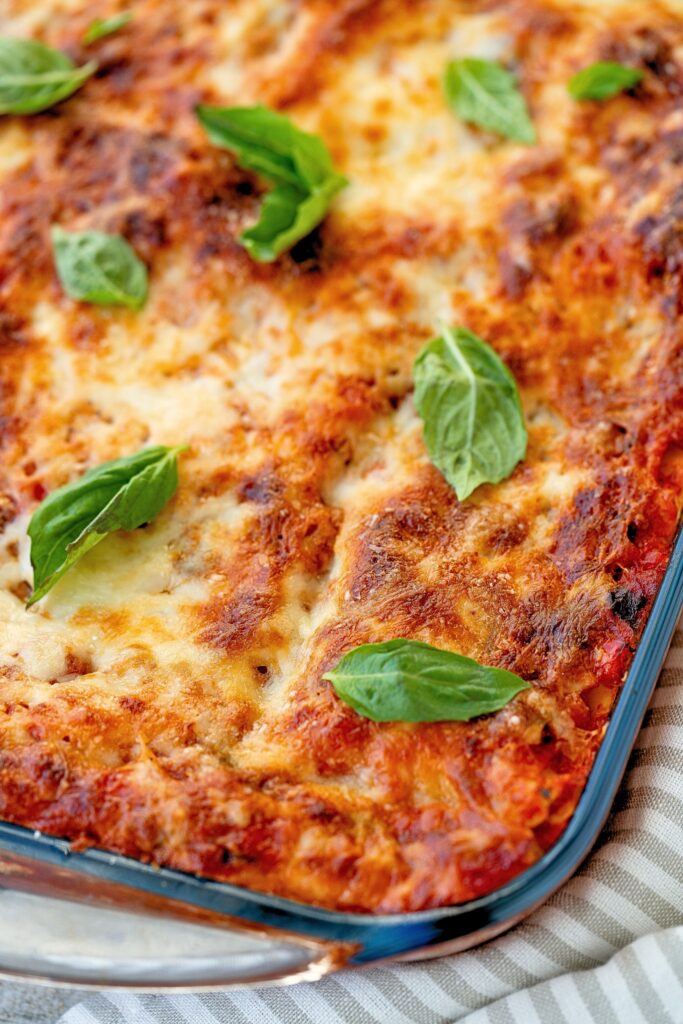
Place the 9×13-inch baking dish on top of a large sheet pan to catch any drips. Bake in the preheated oven for 45 minutes, until the sauce bubbles around the edges and the cheese is melted and golden brown on top.
Remove from the oven and let cool for at least 15 to 30 minutes before cutting and serving.
Make ahead and storage instructions
Make ahead: This lasagna can be fully assembled up to 24 hours before baking. Cover the baking dish with lid or plastic wrap. Take the lasagna out the fridge let it sit at room temperature for about 15 to 20 minutes before baking.
I usually make the marinara sauce the day before, then assemble the lasagna the next day before baking. This helps to break up the work, which makes it easier for me.
To freeze lasagna: Wrap the whole pan tightly in plastic wrap and heavy-duty foil. Store in the freezer for up to 3 months. Let thaw in the fridge overnight before baking.
Leftovers? Let the lasagna cool completely before storing in the fridge in an airtight container for up to 3 days.
To reheat: From the fridge, cover the baking dish with foil and reheat in the oven at 350°F for 30 to 45 minutes, or until it’s 165°F in the center.
Or you can reheat individual slices in the microwave until warmed through. Add a splash of water on top of each lasagna slice before microwaving to prevent it from drying out.
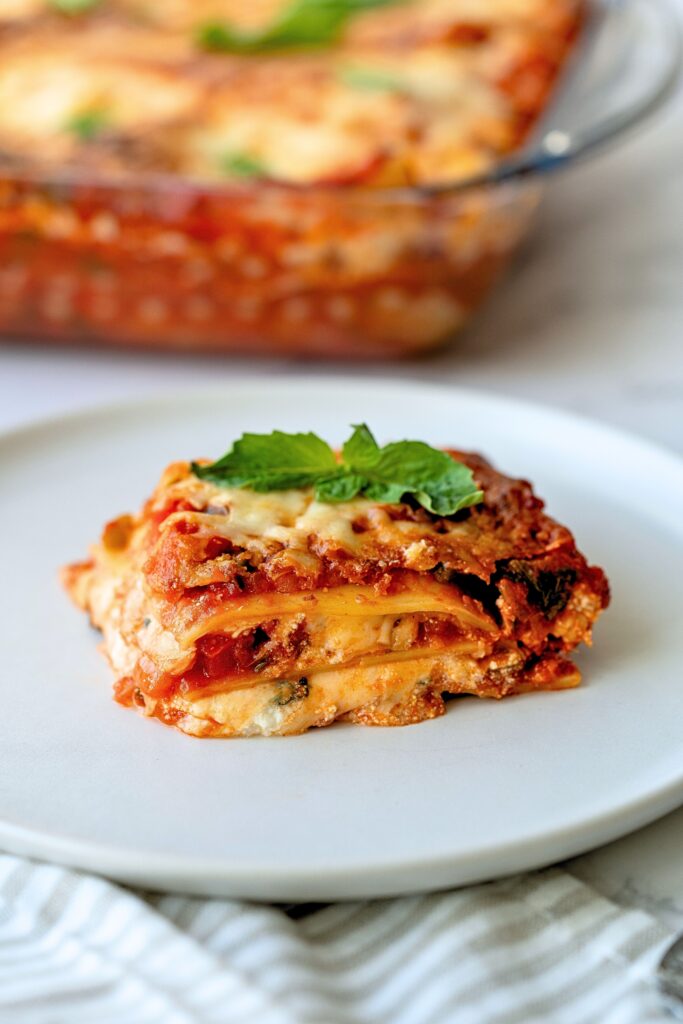
Please let me know how you like this Vegetarian Lasagna recipe in the comments below! Your feedback and review encourages me to keep creating new and yummy recipes. I hope you love this lasagna as much as I do.
Print
Vegetarian Lasagna
- Total Time: 1 hour 50 minutes
- Yield: 12 Servings 1x
- Diet: Vegetarian
Description
This is the best vegetarian lasagna recipe ever! It’s filled with layers of tender lasagna noodles, chunky Italian marinara sauce, creamy ricotta cheese with a hint of lemon zest, fresh basil, and plenty of mozzarella cheese and Parmigiano Reggiano. It comes out the oven hot and bubbly with a golden-brown crust that makes for the ultimate comfort food.
Ingredients
For the marinara sauce:
- 1/3 cup extra virgin olive oil
- 1 large yellow onion, finely chopped
- 1 large carrot, peeled and finely chopped or grated
- 2 celery ribs, finely chopped or grated
- 1 medium red bell pepper, finely chopped
- 1 medium green bell pepper, finely chopped
- 1/2 teaspoon kosher salt
- 1/4 freshly ground black pepper
- 1/4 teaspoon red pepper flakes
- 4 garlic cloves, minced
- 2 tablespoons tomato paste
- 2 28–oz canned whole peeled tomatoes, crushed by hand or with an immersion blender
- 1 bay leaf
- 1 1/2 teaspoons dried oregano
- 2 teaspoons balsamic vinegar
- 1/2 cup fresh chopped basil
For the lasagna assembly:
- 12 dried lasagna noodles (NOT no-boil)
- Extra virgin olive oil, for drizzling
- 2 cups (475g) full-fat ricotta cheese
- 1 cup finely grated Parmigiano-Reggiano, divided
- 1 teaspoon fresh lemon zest
- 1/2 cup finely chopped basil
- 1 pound (450g) low-moisture freshly shredded mozzarella
Instructions
- Make the marinara sauce. In a large heavy-bottomed pot, heat the olive oil over medium heat. Once the oil is hot, add the onion, carrot, celery, red bell pepper, and green bell pepper. Cook, stirring occasionally until the vegetables are tender, about 10 minutes.
- Add the salt, black pepper, red pepper flakes, and garlic and let cook for 1 minute until fragrant. Add the tomato paste and cook for 2 minutes, stirring often.
- Add the canned tomatoes with their juices, bay leaf, dried oregano, and balsamic vinegar. Bring the sauce to a low boil, then turn the heat down low and let simmer, uncovered, for 30 minutes, stirring occasionally. It will reduce slightly in volume and thicken slightly.
- Stir in the fresh basil and let simmer for another 5 minutes. Taste and adjust the seasoning with more salt or red pepper flakes if needed. Remove the heat and discard the bay leaf. Set aside to cool.
- Cook the lasagna noodles. Bring a large pot of salted water to a rolling boil over high heat. Add the noodles and stir a few times to prevent them from sticking together. Cook the lasagna noodles until 1 or 2 minutes before the al dente cooking time. Drain the noodles into a colander and drizzle a little olive oil over the noodles. Gently toss to combine to prevent them from sticking together and set aside.
- Make the ricotta mixture. Add the ricotta cheese, ½ cup of the Parmigiano-Reggiano, fresh lemon zest, and fresh basil in a large bowl. Stir everything together until combined.
- Assemble the lasagna. Preheat the oven to 375°F. Spread one-quarter of the marinara sauce over the bottom of a 9×13-inch baking dish.
- Place the first layer of cooked lasagna noodles evenly on top of the sauce, tearing them to fit if necessary. Use 3 to 4 lasagna noodles per layer (I use 4 noodles per layer).
- Spread another quarter of the marinara sauce over the first layer of noodles. Add half of the ricotta mixture over the sauce and spread it out to make an even layer. It’s okay if there are some gaps. Sprinkle one-third of the mozzarella over the ricotta cheese layer.
- Add a second layer of noodles over the mozzarella layer. Spread another quarter of the marinara sauce over the noodles. Add the remaining ricotta mixture over the sauce and spread it out to make an even layer. Sprinkle another third of the mozzarella over the ricotta layer.
- Add the final layer of noodles over the mozzarella layer. Spread the remaining marinara sauce over the noodles. Sprinkle the rest of the mozzarella cheese over the sauce, then sprinkle the remaining ½ cup of Parmigiano-Reggiano over the entire lasagna.
- Place the 9×13-inch baking dish on top of a large sheet pan to catch any drips. Bake in the preheated oven for 40 to 45 minutes, or until the sauce bubbles around the edges and the cheese is melted and golden brown on top.
- Remove from the oven and let cool for at least 15 to 30 minutes before cutting and serving.
Notes
- Don’t have fresh basil? Use chopped Italian flat-leaf parsley instead.
- Parmigiano-Reggiano: Traditionally, parmesan cheese uses animal rennet, which makes it non-vegetarian. If you need a vegetarian parmesan cheese, there are many vegetarian-friendly versions available. Look for the words “vegetarian rennet”, “microbial rennet”, or vegetable rennet” on the label. If you can’t find a vegetarian version, then leave out the parmesan cheese.
- I recommend using freshly shredded mozzarella cheese and Parmigiano-Reggiano. Avoid using pre-shredded cheese, which usually contains anti-caking agents like potato startch. This can affect its melting ability.
- TIP: If you anticipate that you’ll have leftovers, I like to reserve a little of the marinara sauce to serve with individual slices when reheating.
- Recipe adapated from the Six Seasons of Pasta Cookbook by Joshua Mcfadden.
- Prep Time: 20 minutes
- Cook Time: 90 minutes
- Category: Dinner
- Method: Baked
- Cuisine: Italian



I was looking for a simple meatless cheese lasagna. So glad I tried this recipe. My whole family loved it! Definitely a keeper!
Thank you! I’m so happy you enjoyed it!
This was our dinner tonight. The whole family loved it!
Thank you! I’m so happy you enjoyed it!